
Naming a Protected Origin Product When the Origin Is Not Yours to Own
Kampot pepper holds a Geographical Indication, which protects the region and forbids anyone from owning it. Building a brand on a protected origin means naming around the word that sells it.
Kampot pepper carries a Geographical Indication, the same class of protected origin designation that governs Champagne, Parmigiano-Reggiano, and Darjeeling tea. The world's better kitchens treat it as categorically superior, and it commands a price premium of five to ten times over commodity pepper.
It has never had a brand that matches its status. That absence is a naming problem before it is a design problem, and the naming problem is unusual enough to be worth working through in public.
The structural trap in a protected origin
A Geographical Indication protects the region and the production method. It is deliberately collective. Any qualifying producer may use the designation, which is what makes it valuable to the region and what makes it useless as a brand asset.
So the word that carries all the recognition, Kampot, is precisely the word no producer can own. Worse, it is already crowded. Search the term and the results are a mix of genuine GI product, adjacent product trading on proximity, and packaging that borrows the word without the certification. A consumer cannot easily tell them apart, which means the premium leaks to whoever markets hardest rather than to whoever produces best.
This is the same structural problem Elephant Cashews was built to solve, in a different crop. Cambodia produces the raw material, the world buys it without knowing where it came from, and the margin that should return to Cambodian farmers and processors is captured by intermediaries. Same disease, different symptom.
What the name has to accomplish
The brief writes itself once the trap is named. The brand name has to be ownable, which rules out the geographic descriptor. It has to signal premium origin without leaning on that descriptor. And it has to work phonetically across the markets that matter for this product, which are English, French, and Japanese, because the buyers are Michelin kitchens, luxury food retail, and specialty ecommerce serving professional and serious home cooks.
The origin still appears on the package, of course, and the GI certification mark is prominent. But it appears as a credential rather than as an identity. The brand name is what customers ask for by name; the GI is what proves the brand is entitled to the claim.
That distinction is the whole solution. Champagne houses solved it a century ago. Nobody asks for a bottle of Champagne and means any bottle. They ask for a house, and the appellation is the guarantee behind it.
The other three open questions
Naming is one of four items still being worked through on this engagement, and they are interdependent enough that resolving them in isolation produces a weaker answer.
Positioning relative to the sibling brand. Same ownership as Elephant Cashews, same philosophy of premium Cambodian origin, different category. The visual language has to stand alone on a spice shelf while remaining coherent enough to eventually share space under a national platform brand. Too close and the two products blur. Too far and the family relationship, which is itself an asset, disappears.
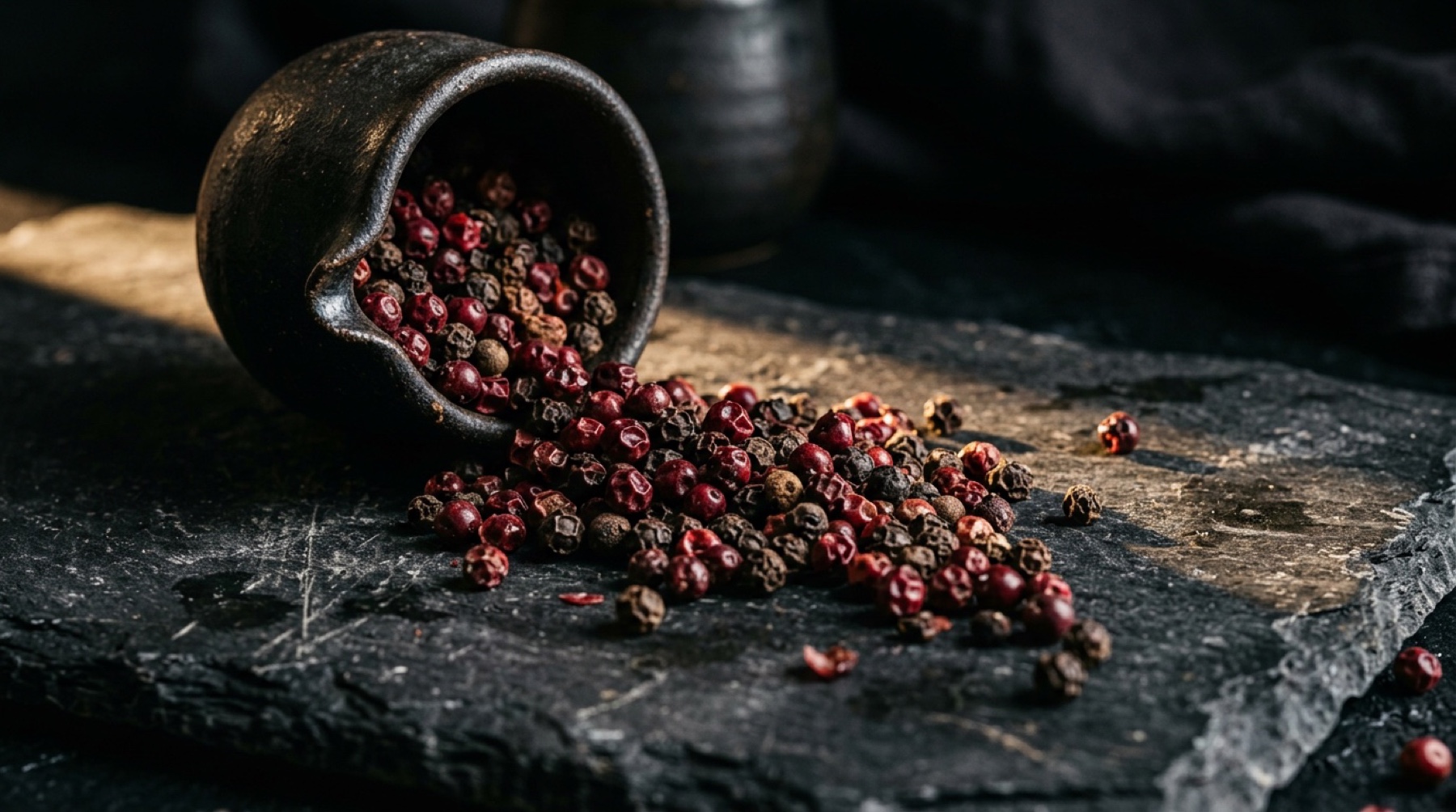
Packaging architecture. A high-end glass jar or ceramic vessel, dark tones, minimal type, GI certification mark prominent. Pepper is visually striking on its own, red and black corns against a dark ground, which argues for a package that frames the product rather than covering it.
Channel strategy. Michelin restaurant supply, luxury food retail of the Harrods and Fauchon tier, specialty ecommerce, and premium gifting. Each of those channels has different packaging requirements, and a name that works in a restaurant supply context but not on a gift shelf constrains the business later.
Why the design work has not started
It would be straightforward to produce an attractive pepper brand this month. It would also be irresponsible, because a name that fails the clearance gate after the identity is approved forces one of two bad outcomes: relaunching under a different name with new artwork, or proceeding under a name with documented legal risk.
The concept principles are already locked and shared with the sibling brand: premium, authentic, proud, honest, sophisticated, natural, educational, global. Never cheap, never touristy, never an Asian souvenir. Photography direction is set, real fields, real farmers, real harvest, morning light.
All of that survives whatever the name turns out to be. The name does not survive being chosen in the wrong order.
A name is not a creative deliverable. It is a legal and commercial asset that happens to be made of letters.
The general lesson for protected categories
Any producer building a brand on a protected origin, whether that is a GI product, a certified appellation, or a designation of protected method, faces the same arithmetic. The certification is what makes the product worth a premium and it is available to every competitor who qualifies.
The brand is the only part that can be owned. Which means the naming work is not decoration on top of the certification, it is the entire mechanism by which the certification turns into a business rather than a commodity floor price.